
Emotional Changes Across the Cycle: Why Your Feelings Shift Week to Week

If you’ve ever felt like your emotions change without warning…
You’re not imagining it.
One week, you feel clear, confident, social.
The next, everything feels heavier. Irritating. Overwhelming.
This isn’t random.
It’s your hormones.
We see emotional shifts as patterns, not problems.
Your cycle is not just physical. It’s deeply emotional.
Understanding it changes everything.
What Causes Emotional Changes Across the Cycle?
Emotions don’t just come from “thoughts.”
They’re influenced by your biology.
Two hormones play a major role:
Estrogen → supports serotonin (your “feel good” brain chemical)
Progesterone → has calming, sedating effects (but can also feel heavy)
As these rise and fall across the month, your emotional state changes with them.
This means:
Your sensitivity changes
Your stress tolerance changes
Your energy for people changes
Nothing is “wrong.”
Your nervous system is responding exactly how it’s designed to.
Your Mental Health Is Not Random - It’s Cyclical
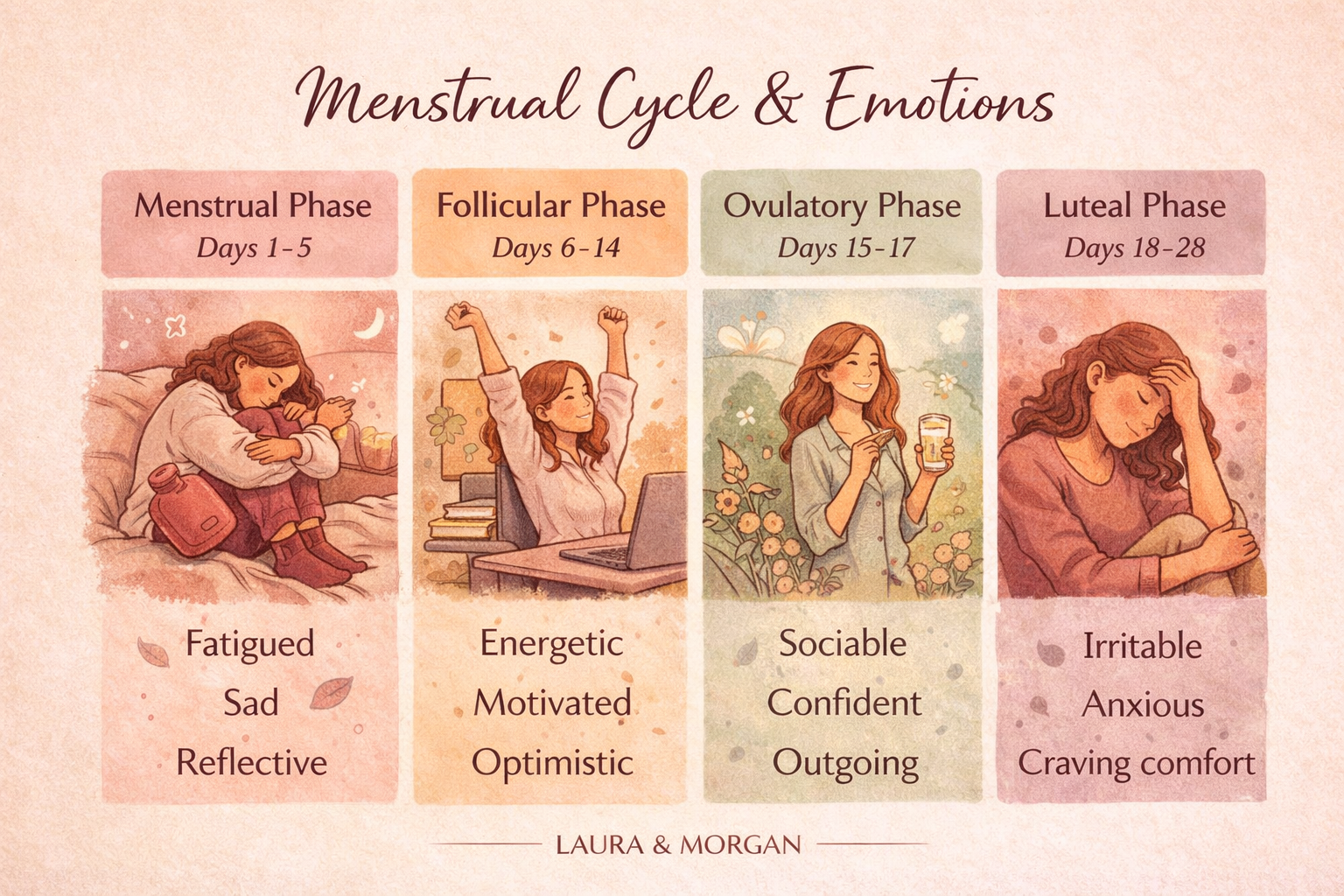
The 4 Phases of Emotional Experience
Instead of seeing your cycle as one flat experience, it helps to understand it in phases.
Each phase has its own emotional pattern.
Menstrual Phase (Days 1–5)
Theme: Withdrawal, reflection, emotional depth
This is when your period starts.
Hormones are at their lowest.
What you might feel:
Low energy
More introspective
Emotionally raw or sensitive
Less tolerance for social interaction
This phase often brings clarity.
Things you’ve been pushing away emotionally may come up.
Not to overwhelm you…
But to be processed.
👉 Think of this phase as your system asking:
“What needs attention?”
If you’ve ever thought, “Why do I feel low on my period?” this is why.
Your system is in a reset phase.
It’s not a time for pushing. It’s a time for slowing down.
Follicular Phase (Days 6–13)
Theme: Lightness, optimism, emotional reset
Estrogen starts rising.
And with it… your mood.
What you might feel:
More motivated
Curious, open-minded
Social energy returning
Less emotional heaviness
This is often when anxiety feels lower.
Things feel more manageable.
👉 This phase is great for:
Starting new things
Making decisions
Reconnecting with people
It’s your brain and body saying:
“Let’s move forward.”
Ovulation Phase (Around Day 14)
Theme: Confidence, connection, emotional expansion
Estrogen peaks.
This is usually the most emotionally “up” part of the cycle.
What you might feel:
Confident
Outgoing
Emotionally expressive
More connected to others
You may notice:
Conversations feel easier
You feel more understood
You’re more empathetic and engaging
👉 This phase supports:
Communication
Visibility
Relationships
It’s your system in full expression mode.
Luteal Phase (Days 15–28)
Theme: Sensitivity, boundaries, emotional intensity
Progesterone rises, then falls.
This is where most emotional struggles show up.
What you might feel:
Irritability
Anxiety
Mood swings
Overthinking
Emotional overwhelm
But here’s the important part:
This phase is not just “bad.”
It’s revealing.
👉 It highlights:
What’s not working
Where your boundaries are weak
What’s draining you
Many people experience PMS or PMDD symptoms here.
Your emotional system is more sensitive…
Which means it’s also more honest.
Why Emotional Changes Feel So Intense
It’s not just hormones.
It’s the interaction between:
Hormones
Your nervous system
Your life context
For example:
Stress makes luteal phase symptoms stronger
Poor sleep amplifies emotional swings
Unprocessed emotions surface more easily
So if you feel like:
“Why am I reacting like this?”
A better question is:
“What is my body responding to right now?”
How to Work With Your Emotional Cycle (Not Against It)
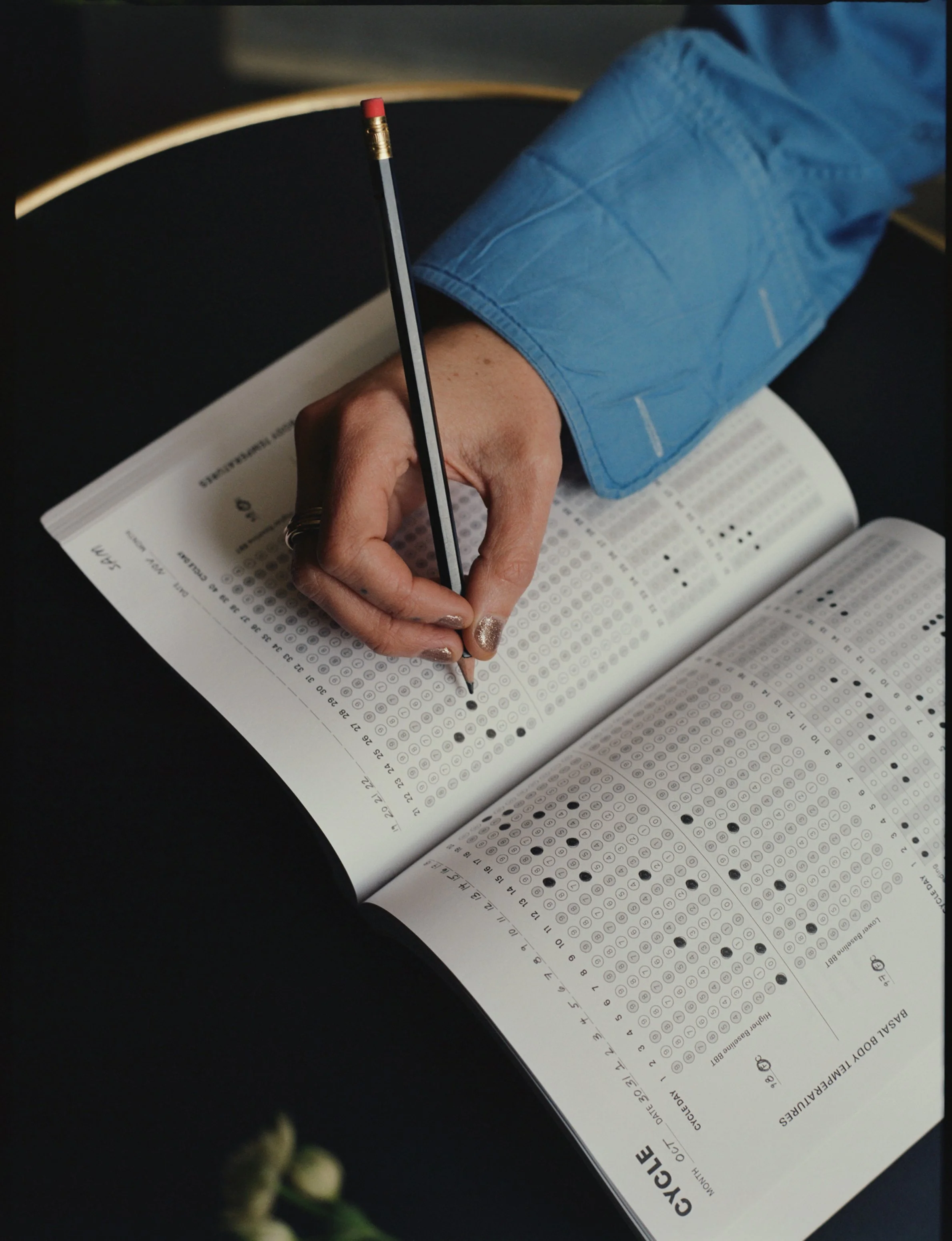
1. Track Your Emotional Patterns
Start simple.
Each day, note:
Mood
Energy
Triggers
After 1–2 cycles, patterns become obvious.
2. Adjust Expectations by Phase
Instead of expecting consistency…
Work with fluctuation.
Examples:
Plan social events in follicular/ovulatory phases
Reduce workload during late luteal phase
Give yourself more space during menstruation
You don’t need to “fix” your emotions.
You need to understand them.
Here’s how:
3.Build Emotional Awareness (Not Judgment)
Instead of:
“Why am I so emotional?”
Try:
“What is this emotion telling me?”
Your emotions are signals.
Not problems.
4. Support Your Nervous System
Small things make a big difference:
Sleep consistency
Balanced meals
Lowering caffeine (especially in luteal phase)
Gentle movement
Your emotional stability is deeply connected to your physical state.
When Emotional Changes Feel Too Much
Sometimes, it’s more than just normal variation.
If you experience:
Severe mood swings
Depression before your period
Intense anxiety or anger
Symptoms that disrupt your life
You might be dealing with PMDD (Premenstrual Dysphoric Disorder).
This is real. And treatable.
Working with a therapist or medical provider can help you:
Understand patterns
Regulate emotional responses
Find relief
Some important questions frequently asked
Why Do I Feel Like a Different Person Before My Period?
This is one of the most common and most confusing experiences.
You might feel like:
Your thoughts are harsher
Your confidence drops suddenly
Small things feel overwhelming
You don’t recognize your reactions
It can feel like your personality has shifted overnight.
But what’s actually happening is a shift in your emotional sensitivity and perception.
In the days leading up to your period, your system becomes more reactive. Your brain processes emotions more intensely. Thoughts that would normally pass by start to feel more real, more urgent, more true.
This doesn’t mean those thoughts are accurate.
It means your internal filter has changed.
Many women describe this phase as:
“Everything feels louder in my head.”
Once your cycle resets, those same thoughts often lose their intensity.
Understanding this can help you:
Avoid making big decisions in this phase
Pause before reacting
Be less critical of yourself
You’re not becoming a different person.
You’re experiencing a different state.
Why Do I Feel More Anxious Before My Period?
If you notice a spike in anxiety before your period, you’re not alone.
This is one of the most searched and reported emotional changes in the menstrual cycle.
During the luteal phase, your body is going through a transition. Hormonal shifts can increase your nervous system sensitivity.
This can show up as:
Overthinking
Racing thoughts
Feeling on edge
Increased worry
Things that normally wouldn’t bother you suddenly feel bigger.
Even small uncertainties can feel overwhelming.
What’s important to understand is that this anxiety is often state-based, not situation-based.
Nothing external may have changed.
But internally, your system is more alert, more sensitive, more reactive.
That’s why the anxiety can feel confusing.
Knowing this can help you:
Recognize patterns instead of panicking
Avoid spiraling into worst-case thinking
Give yourself more support during this phase
Why Do My Emotions Change So Much Throughout the Month?
It can feel frustrating to not feel consistent.
One week you feel:
Confident
Clear
Motivated
And another week:
Sensitive
Doubtful
Overwhelmed
This doesn’t mean you’re unstable.
It means your internal environment is shifting.
Your menstrual cycle is not just physical - it’s neurological and emotional.
Each phase brings a different internal state:
One phase supports clarity and action
Another supports reflection and slowing down
The problem is not the changes.
The problem is expecting yourself to feel the same every day.
When you start seeing your emotions as patterns instead of problems, things begin to make more sense.
Why Do Small Things Feel So Big Before My Period?
You might notice that:
Minor issues feel overwhelming
Small conflicts feel intense
You react more strongly than usual
This is not you being “too sensitive.”
It’s your emotional threshold shifting.
During certain phases of your cycle, especially before your period, your tolerance for stress can decrease.
This means:
You feel things faster
You feel things deeper
You react sooner
It’s not about weakness.
It’s about capacity.
Your system has less bandwidth during this phase.
Understanding this can help you:
Lower expectations
Reduce unnecessary stress
Be more intentional with your energy
Is It Normal to Feel Emotional Before Your Period?
Yes, to an extent.
Emotional changes before your period are a common part of the menstrual cycle.
This can include:
Mood swings
Irritability
Sadness
Anxiety
For many women, these feelings are manageable and pass once the cycle resets.
However, if you experience:
Intense depression
Extreme anger
Feelings of hopelessness
Difficulty functioning
It may be something more, like PMDD.
In that case, it’s important to seek support.
You don’t have to navigate it alone.
Why Do I Overthink More During Certain Times of My Cycle?
Overthinking often increases during phases where emotional sensitivity is higher.
You might notice:
Replaying conversations
Doubting decisions
Questioning relationships
This happens because your brain is processing information differently.
Instead of filtering things quickly, it holds onto them longer.
Thoughts feel more important than they actually are.
This can create a loop where:
You think more
You feel more
Which makes you think even more
Breaking that loop starts with awareness.
Not every thought needs to be analyzed.
Not every feeling needs to be acted on.
Sometimes, it just needs to be observed